
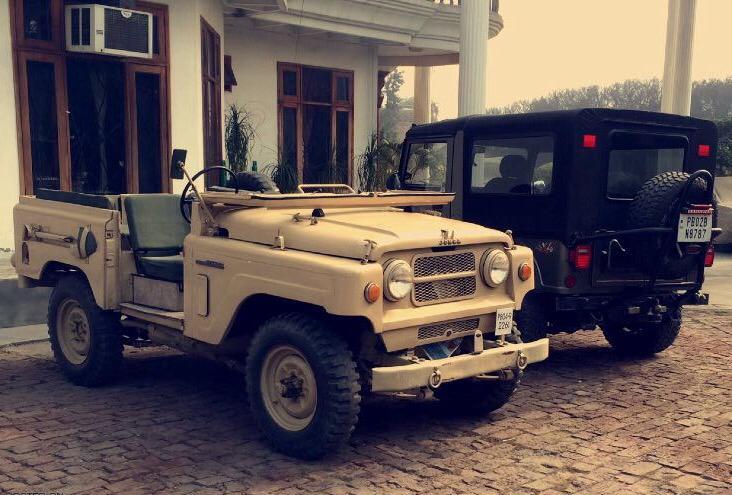
India had been at war since its independence in 1947 and most of the disturbance occurred along the Himalayan ranges. A young country, trying to put its pieces together was fighting an existential war. The Indian Army needed a vehicle that was not only strong enough to face the elements of nature at high altitudes but could also survive the violent conditions of the ‘ground zero’.
At the same time, Japanese auto major Nissan was earning its name as an SUV maker. After the success of its first-generation Patrol SUVs, Nissan had recently launched the second generation 4W60. The Indian Army was interested in P60 vehicles to serve at the toughest war zones on the planet. The two entities came together, and Vehicle Factory Jabalpur was sanctioned in 1965 to customize P60. The Japanese SUV maker started the production from Jabalpur Ordinance and Guncarriage Assembly from which it derives the acronym JONGA. Nissan JONGA ran on a 4-litre, inline petrol engine with 6 cylinders that gave an approximate power of 145 bp and 330 Nm of peak torque. It was often referred to as a bulletproof engine, as it was built for rugged and harsh conditions. The 4×4 quickly gained its name among army men. Its brute force and confident infusing structure and design came handy during wartime.
JONGA was modified to suit several military requirements- ambulance, signal vehicle/rovers and recovery vehicles. It was very successful on the mountainous terrains, and the Indian Army participated in several expeditions and rallies with the vehicle. It was part of one of the most enterprising ‘surgical strikes’ undertaken by India during the 1971 war. Para Commandos used to travel on JONGAs, modified to hold guns and other supplies. India went on to be victorious in the 1971 war and helping Bangladesh in its liberation.
In 2009, the JONGA again made headlines in local newspapers in Madhya Pradesh, for the last 500-km celebratory drive from Mhow cantonment area to Jabalpur. The army may not be using JONGAs officially anymore but war veterans who have spent weeks and months with the vehicle still remember it fondly as ‘the Rhinoceros’ for its ability to charge towards its destination like a warrior on wheels. The love that bloomed in the most treacherous of situations is still alive. Many army men and their SUV enthusiasts across India still own these war heroes.
The JONGA has found its place in many articles of pop-culture, for example cinema and wartime literature. While next generation JONGA owners modify the vehicle with big off-road tyres, paint it in vibrant colours and glittering accessories. On the other hand, more conservative owners like to keep it as original as possible. One thing common to the two groups is that they cherish the stories that they have created together.

 Power Drive